Content feed Comments Feed
Sponsors
Showing posts with label digestive diseases. Show all posts

Gastroesophageal reflux (GER) occurs when stomach contents reflux, or back up, into the esophagus during or after a meal. The esophagus is the tube that connects the mouth to the stomach. A ring of muscle at the bottom of the esophagus opens and closes to allow food to enter the stomach. This ring of muscle is called the lower esophageal sphincter (LES).

The LES normally opens to release gas after meals. With infants, when the LES opens, stomach contents often reflux into the esophagus and out the mouth, resulting in regurgitation, or spitting up, and vomiting. GER can also occur when babies cough, cry, or strain.

Symptoms

GER is common in healthy infants. More than half of all babies experience reflux in the first 3 months of life, but most stop spitting up between the ages of 12 to 24 months. Only a small number of infants have severe symptoms. An infant with GER may experience

* spitting up
* vomiting
* coughing
* irritability
* poor feeding
* blood in the stools
In a small number of babies, GER results in symptoms that cause concern. These symptoms include
* poor growth due to an inability to hold down enough food
* irritability or refusing to feed due to pain
* blood loss from acid burning the esophagus
* breathing problems
These problems can be caused by disorders other than GER. Your health care provider will need to determine whether GER is the cause of your child’s symptoms.

Diagnosis

A baby who is consistently spitting up or vomiting may have GER. The doctor or nurse will talk with you about your child’s symptoms and examine your child. Tests may be ordered to help determine whether your child’s symptoms are related to GER. Sometimes treatment is started without tests. If the infant is healthy, content, and growing well, often no tests or treatment are needed.

Treatment

The treatment for baby reflux depends on an infant’s symptoms and age. Some babies may not need treatment because GER often resolves by itself. Healthy babies may only need their feedings thickened with cereal and to be kept upright after eating. Overfeeding can aggravate reflux, so your health care provider may suggest different ways of handling feedings. For example, smaller quantities with more frequent feedings can help decrease the chances of regurgitation. If a food allergy is suspected, you may be asked to change the baby’s formula.

Breastfeeding mothers may be asked to change their own diets for 1 to 2 weeks. If a child is not growing properly, higher-calorie food or tube feeding may be recommended.

When an infant is uncomfortable, has difficulty sleeping or eating, or does not grow, your health care provider may suggest a trial of medication to decrease the amount of acid in the stomach. Any potential complications related to the medication will be explained. However, most infants don’t need medication and outgrow reflux by 1 or 2 years of age.

*If medication is needed, treatment will often start with a class of medications called H2-blockers, also called H2-receptor agonists. These drugs help keep acid from backing up into the esophagus. H2-blockers are often used to treat children with GER because they come in liquid form. H2-blockers include

Call your child’s health care provider right away if any of the following occur:

* vomiting large amounts or persistent projectile (forceful) vomiting, particularly in infants younger than 2 months old
* vomiting fluid that is green or yellow or that looks like coffee grounds or blood
* difficulty breathing after vomiting or spitting up
* refusing food that seems to result in weight loss or poor weight gain
* excessive crying and irritability

Learn About

Source: Gastroesophageal Reflux in Infants. http://digestive.niddk.nih.gov/ddiseases/pubs/gerdinfant/index.htm. Accessed June 17, 2010.

[Top of Page]
Dyspepsia, also known as indigestion, is a term used to describe one or more symptoms including a feeling of fullness during a meal, uncomfortable fullness after a meal, and burning or pain in the upper abdomen.

This digestive condition is common in adults and can occur once in a while or as often as every day.

Dyspepsia Causes

Dyspepsia can be caused by a condition in the digestive tract such as gastroesophageal reflux disease (GERD), peptic ulcer disease, cancer, or abnormality of the pancreas or bile ducts. If the condition improves or resolves, the symptoms of indigestion usually improve.

Sometimes a person has indigestion for which a cause cannot be found. This type of indigestion, called functional dyspepsia, is thought to occur in the area where the stomach meets the small intestine. The indigestion may be related to abnormal motility—the squeezing or relaxing action—of the stomach muscle as it receives, digests, and moves food into the small intestine.

Symptoms of Dyspepsia

Most people with indigestion experience more than one of the following symptoms:

* Fullness during a meal. The person feels overly full soon after the meal starts and cannot finish the meal.

* Bothersome fullness after a meal. The person feels overly full after a meal—it may feel like the food is staying in the stomach too long.

* Epigastric pain. The epigastric area is between the lower end of the chest bone and the navel. The person may experience epigastric pain ranging from mild to severe.

* Epigastric burning. The person feels an unpleasant sensation of heat in the epigastric area.
Other, less frequent symptoms that may occur with indigestion are nausea and bloating—an unpleasant tightness in the stomach. Nausea and bloating could be due to causes other than indigestion.

Sometimes the term dyspepsia is used to describe the symptom of heartburn, but these are two different conditions. Heartburn is a painful, burning feeling in the chest that radiates toward the neck or back. Heartburn is caused by stomach acid rising into the esophagus and may be a symptom of GERD. A person can have symptoms of both indigestion and heartburn.

Diagnosis

To diagnose indigestion, the doctor asks about the person’s current symptoms and medical history and performs a physical examination. The doctor may order x rays of the stomach and small intestine.

The doctor may perform blood, breath, or stool tests if the type of bacteria that causes peptic ulcer disease is suspected as the cause of indigestion.

The doctor may perform an upper endoscopy. After giving a sedative to help the person become drowsy, the doctor passes an endoscope—a long, thin tube that has a light and small camera on the end—through the mouth and gently guides it down the esophagus into the stomach. The doctor can look at the esophagus and stomach with the endoscope to check for any abnormalities. The doctor may perform biopsies—removing small pieces of tissue for examination with a microscope—to look for possible damage from GERD or an infection.

Because indigestion can be a sign of a more serious condition, people should see a doctor right away if they experience
* frequent vomiting
* blood in vomit
* weight loss or loss of appetite
* black tarry stools
* difficult or painful swallowing
* abdominal pain in a nonepigastric area
* indigestion accompanied by shortness of breath, sweating, or pain that radiates to the jaw, neck, or arm
* symptoms that persist for more than 2 weeks
Treatment of Dyspepsia

Some people may experience relief from symptoms of indigestion by
* eating several small, low-fat meals throughout the day at a slow pace
* refraining from smoking
* abstaining from consuming coffee, carbonated beverages, and alcohol
* stopping use of medications that may irritate the stomach lining—such as aspirin or anti-inflammatory drugs
* getting enough rest
* finding ways to decrease emotional and physical stress, such as relaxation therapy or yoga
The doctor may recommend over-the-counter antacids or medications that reduce acid production or help the stomach move food more quickly into the small intestine. Many of these medications can be purchased without a prescription. Nonprescription medications should only be used at the dose and for the length of time recommended on the label unless advised differently by a doctor. Informing the doctor when starting a new medication is important.

Antacids, such as Alka-Seltzer, Maalox, Mylanta, Rolaids, and Riopan, are usually the first drugs recommended to relieve symptoms of indigestion. Many brands on the market use different combinations of three basic salts—magnesium, calcium, and aluminum—with hydroxide or bicarbonate ions to neutralize the acid in the stomach. Antacids, however, can have side effects. Magnesium salt can lead to diarrhea, and aluminum salt may cause constipation. Aluminum and magnesium salts are often combined in a single product to balance these effects.

Calcium carbonate antacids, such as Tums, Titralac, and Alka-2, can also be a supplemental source of calcium, though they may cause constipation.

H2 receptor antagonists (H2RAs) include ranitidine (Zantac), cimetidine (Tagamet), famotidine (Pepcid), and nizatidine (Axid) and are available both by prescription and over-the-counter. H2RAs treat symptoms of indigestion by reducing stomach acid. They work longer than but not as quickly as antacids. Side effects of H2RAs may include headache, nausea, vomiting, constipation, diarrhea, and unusual bleeding or bruising.

Proton pump inhibitors (PPIs) include omeprazole (Prilosec, Zegerid), lansoprazole (Prevacid), pantoprazole (Protonix), rabeprazole (Aciphex), and esomeprazole (Nexium) and are available by prescription. Prilosec is also available in over-the-counter strength. PPIs, which are stronger than H2RAs, also treat indigestion symptoms by reducing stomach acid. PPIs are most effective in treating symptoms of indigestion in people who also have GERD. Side effects of PPIs may include back pain, aching, cough, headache, dizziness, abdominal pain, gas, nausea, vomiting, constipation, and diarrhea.

Prokinetics such as metoclopramide (Reglan) may be helpful for people who have a problem with the stomach emptying too slowly. Metoclopramide also improves muscle action in the digestive tract. Prokinetics have frequent side effects that limit their usefulness, including fatigue, sleepiness, depression, anxiety, and involuntary muscle spasms or movements.

If testing shows the type of bacteria that causes peptic ulcer disease, the doctor may prescribe antibiotics to treat the condition.

Suggested Readings:

View List of Digestive Diseases Topics.

Source: Indigestion. http://digestive.niddk.nih.gov/ddiseases/pubs/indigestion/index.htm. Accessed June 17, 2010.

Page Last Revised: December 4, 2010

[Top of Page]

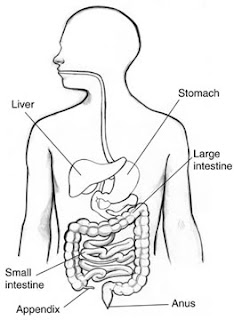
The digestive system is composed of the digestive tract and organs that aid in digestion of food. The digestive tract includes the mouth, pharynx, esophagus, stomach, small intestine, large intestine, and the anus.

Other organs or structures that help in digesting food are the teeth, salivary glands, the liver, and the pancreas.

The following are brief descriptions of the common digestive diseases.

Appendicitis

Appendicitis is the inflammation of the appendix—a small organ attached to the first part of the large intestine. It can be caused by blockage to the lumen of the appendix.

Illustration of the digestive tract.The bacteria in the appendix can multiply and cause inflammation of the appendix. Symptoms of disease include pain in the lower right part of the abdomen, low-grade fever, nausea and vomiting.


Colon and Rectal Cancer

Cancer of the colon and rectum is sometimes called colorectal cancer. A type of cancer, colorectal cancer is one of the leading causes of cancer-related deaths worldwide, according to recent data provided by the World Health Organization. The condition occurs when cells in the colon or rectum abnormally divide forming a mass called tumor. The cancer cells can travel through the blood or lymph causing cancer in other organs of the body.

Possible signs of colon or rectal cancer include change in bowel habits and blood in the stool.

Colorectal cancer treatment is more effective if found early where cancer has not spread to other parts of the body. Treatment options for colorectal cancer include surgery, chemotherapy, and radiation therapy or a combination of these treatments.

[Top of Page]

Diarrhea

Diarrhea is a common problem, which is described as having loose, watery stools. People with diarrhea, according to the National Digestive Diseases Information Clearinghouse (NDDIC), often have frequent bowel movements and may pass more than a quart of watery stool a day. Having diarrhea can cause a person to be dehydrated, which can be life-threatening.

Common causes of diarrhea include infection with bacteria, viruses, or parasites; some foods; or health problems affecting the digestive system.

The main treatment of diarrhea involves replacing lost fluids.

Foodborne Illness or Food Poisoning

Foodborne illness can be caused by foods and beverages that have been contaminated by bacteria, viruses, or parasites. Symptoms of foodborne illness include upset stomach, diarrhea, abdominal cramping, and vomiting.

Gas (Flatulence)

Everyone can have gas, may it be in the form of burping or passing gas. More often, gas is odorless. The odor in passed gas, however, can be caused by sulfur that is normally produced by bacteria in the colon. Limiting foods known to cause gas may help.

[Top of Page]

Gastritis

Gastritis is the inflammation of the lining of the stomach. It is not a single disease but actually several conditions that have some inflammation of the stomach lining. Too much alcohol drinking, long-term use of certain pain relievers and certain bacterial infection can cause gastritis. Other health problems or conditions can cause gastritis as well.

Gastritis symptoms include pain or abdominal upset, bloating, and burning in the upper abdomen.

Gastroesophageal reflux (GER)

Gastroesophageal reflux occurs when the muscle called lower esophageal sphincter (LES) fails to close allowing stomach acid to flow back into the esophagus. The LES is a smooth muscle that acts as a valve between the esophagus and the stomach. The flowing back of stomach contents including acid is called a reflux, which can cause heartburn—a burning sensation on the chest.

Gastroesophageal reflux disease (GERD)

Gastroesophageal reflux disease is the more serious form of gastroesophageal reflux (GER). A reflux that occurs more often may mean that a person has GERD. Like GER, heartburn is a common symptom of GERD. However, GERD that persists for a long time can lead to more serious problems in the digestive tract.

[Top of Page]

Hemorrhoids

Hemorrhoids are swollen, inflamed veins around the anus or lower rectum. It is common in both men and women. In fact, according to the National Digestive Diseases Information Clearinghouse, about half of the population will experience hemorrhoids by age 50. The most common symptom of hemorrhoids is having blood in the stool. Pain may also be felt around the anus.

Most cases of hemorrhoids are temporary and usually goes away without special medical treatment.

Heartburn

Heartburn is the burning sensation felt on the chest when acid in the stomach flows back in the esophagus—the tube connecting the pharynx to the stomach. Heartburn is more of a symptom of a health problem rather than a disease itself.

Stomach Ulcers (Peptic Ulcers)

A stomach ulcer is a type of peptic ulcer that occurs when a sore develops in the lining of the stomach. Sometimes peptic ulcer occur in the duodenum—the first part of the small intestine—called duodenal ulcer. Most cases of stomach ulcers are caused by bacteria called Helicobacter Pylori or H. pylori. Long term use of certain pain relievers can cause the condition as well. Symptoms of stomach ulcer include gnawing abdominal pain, poor appetite, weight loss, nausea and vomiting.

Suggested Readings:

View List of Digestive Diseases Topics.

Page Last Revised: December 4, 2010

[Top of Page]

Disclaimer: The information on this website is not intended as a substitute for medical professional help or advice but is to be used only as an aid in understanding medical conditions. A physician should always be consulted for any health problem. The Digestive System Diseases website provides links to other organizations as a service to our readers and is not responsible for the information, services, or products provided by these web sites, health professionals, or companies.

Copyright © 2017 Digestive System Diseases. Spread the Love and Abundance!
eXTReMe Tracker

Our Site